
Overview of Steel is a cornerstone of the Indian economy and industry, however, its manufacturing process is highly energy intensive, it relies on conventional energy sources. As a consequence, it is the biggest source of CO2 emission and one of the most carbon-intensive industrial processes in the world. Capturing CO2 is then a necessary and inevitable option in order to mitigate the global carbon emission from the heavy industry sector. The article identifies the probable technologies and options to deal with a decarbonization trail, and an overview of respective technology is provided for better understanding. Some of the advanced recommendations for carbon neutrality processes through a viable and advanced technology is discussed, and it could be a future model to reach net zero carbon emissions by 2050. This review covers the impact of membrane based technology towards carbon neutrality and also portrays the future research possibilities towards this mission. Being a R&D company, NxTBrane is focused on the same issue and our target is to develop a membrane based technology to capture CO2 from different industrial sectors.
Keywords: NetZero emission; CO2 capture; Amine scrubbing, PSA technology, Cryogenic distillation, Membrane technology; Zeolite
Introduction and Problem Statement
The demand of steel in the Indian market is growing rapidly and simultaneously CO2 emissions from steel sector could increase up to 837 million tonnes by 2050.1 In the recent 26th Conference of Parties (CoP26) at Glasgow on 1st November 2021, the Government of India pledged to reduce the total projected carbon emissions by one billion tons by 2030 and achieve Net Zero emission by 2070. In this case, Steel and Iron industries are in the alarming stage and need to take prompt action towards mitigating carbon dioxide emissions to prevent the
worst effects of CO2 on climate change.
So far, most research and development has addressed capturing CO2 released from coal power plants, refineries, and petrochemicals as they are the leading point source emitters globally. Cement and steel plants also emit large amounts of CO2 and are potentially easier targets for a CO2 capture process. Table 1 shows the data of CO2 release from power and large industrial sources. The CO2 content in coal power plant flue gas is ~ 12-15%
CO2 and cement and steel plant flue gas contains ~ 20-30% CO2
| Source | Number of Sources | Emissions Million tonnes/yr | Average Source size Million tonnes/yr | Average CO2 Concentration (mol%) |
| Electric Power Plants | 4940 | 10540 | 2.1 | 12-15% |
| Cement Production | 1180 | 930 | 0.8 | 20-30% |
| Refineries | 640 | 800 | 1.3 | 30-40% |
| Iron and Steel Plants | 270 | 650 | 2.4 | 20-30% |
| Petrochemical | 470 | 380 | 0.8 | 5-10% |
Ref: https://pubs. acs.org/doi/10. 1021/acs.iecr.8b02574
Steel and iron production is reliant on coal and the production process is energy-intensive as it requires high temperatures to transform iron ore into steel. Steel plants have a number of furnaces and subunits involved in the production process that emits carbon dioxide. The largest of these is the blast furnaces and it is the major point source of CO2 emission. The gas from the process is removed as blast furnace off-gas from the top of the
furnace. The gas contains ~20% CO2, ~25% CO, 2-5% H2 and 50-55% N2, and other acidic gases (H2S, SO2 in PPM level). In steel production, the average CO2 emission is about 1.85 tons per ton of steel produced.3 So, removing carbon dioxide from power plant flue gases is an important step to limit the amount of
greenhouse gases emitted to the atmosphere..
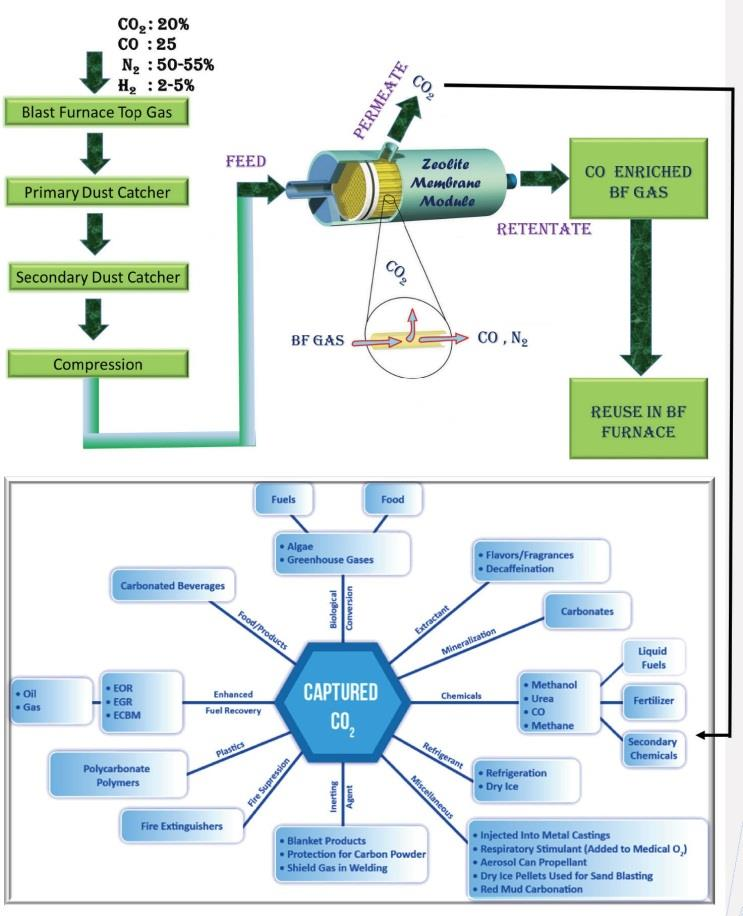
In addition, Fugitive emission from steel/iron industry is an apparent and unavoidable disquiets which is responsible for ecological turmoil. This emission is so-called an indirect emission and defined as a chemical, or a mixture of chemicals, in any physical form. This type of emission is resulted from an unanticipated or
spurious leak in an industrial site. 4 Different technology are developed and implemented by many steel/iron industries globally to control the fugitive emissions. The well-known processes are bag filters using vacuum system, electrostatic precipitators (use electrical energy to charge particles), dry fog system (use ultrasonic nozzles by injecting air and water at high pressure for dust suppression), and activated carbon adsorbers,
etc Addressing the problem of emissions is an essential exercise that steel industries around the globe need to focus on. In both cases (CO2 emission and fugitive emission), reducing CO2 emission case is an important task.
Steel manufacturers need the technology, expertise, and guidance to implement affordable and scalable solutions that help them achieve their net zero carbon emission goals. The future of the steel industry needs to include a plan that utilizes carbon capture and utilization technology (CCU) to reduce fossil fuel carbon emissions and cut the carbon footprint of the industry as a whole. The best way to decarbonize existing steel plants is to use CCUS on the blast furnace to capture and store or utilize the carbon dioxide. The most favorable technology is Top Gas Recycling (TGR) process to significantly reduce CO2 emission. In this process, CO2 is separated from the blast furnace gas composition to increase the calorific value and recycle the CO2-free BF gas to use in steel making process. The technology is mainly based on lowering the usage of fossil carbon (coke) via reuses of the reducing agents (CO2 and H2) after the removal of the CO2 from the top gas and leads to lower energy requirements. Instead, using CO2 to create valuable products might lower the net costs of reducing emissions or removing carbon dioxide from the atmosphere. The CO2 storage and its conversion to economically valuable products is a possible route to mitigate CO2 footprint and provide an additional revenue stream for steel makers.5 Hence, the separation of CO2 is a primary process to realize the use case of CO2 to valuable
products (Fig. 1).
Nowadays, there is increasing interest among researchers to search for efficient methods for CO2 separation.5-25
Conventional technologies including pressure-swing adsorption, cryogenic distillation, and amine scrubbing are employed for CO2 separation.7,8,26 However, these processes are energy intensive process.27-29
The background of conventional technologies used for CO2 separation is summarized here.
Pressure-swing Adsorption
Pressure swing adsorption (PSA) is a technology used to separate some gas species from a mixture of gases under pressure. The separation depends on the species molecular characteristics and affinity for an adsorbent material. In this process, only the gas to be separated is adsorbed, while all other gases in the mixture pass through the adsorbentbed. The PSA has four basic process steps: (i) adsorption (ii) de-
pressurization (iii) regeneration (iii) re-pressurization. Specific adsorptive materials (e.g., zeolites, activated carbon, molecular sieves, etc.) are used as an adsorbent to preferentially adsorb the target gas species at high pressure. The process then swings to low pressure to desorb the adsorbed material and the process is widely known as Pressure Swing Adsorption. The selection of the CO2 adsorbent is the most important issue and Zeolite 13X is one of the most well-known adsorbents for its industrial availability and higher CO2 selectivity against other gases such as N2 and CO Cryogenic Distillation: Cryogenic distillation is a well-known technology for CO2 capture. In cryogenic CO2 capture process, the phase change occurs to separate CO2. CO2 is cooled to a low
temperature (about -140-150°C) that it de-sublimates and then the solid CO2 is separated from the remaining light gases. Next, the solid form of CO2 (dry ice) can be used for different applications or it needs to be melted, pressurized, and easily transported to the designated storage or disposal facility. However, the cryogenic system is an energy intensive process and for all cryogenic systems, thermal integration and temperature management is required to minimize the energy consumption of the process.
Amine Scrubbing
In steel/Iron industries, conventional amine Solvent based Absorption/Regeneration system remains the preferred technology for CO2 capture and the process is called amine scrubbing. The flue gases coming out of a power plant are quite hot and it is desirable to cool down the flue gases and need to remove other impurities before use them into the scrubbing system. The system consists of two main elements, an absorber, and a regenerator (or stripper). Amine based solvent is used as a sorbent where CO2 is absorbed followed by CO2 regeneration with the application of heat and CO2 gets separated from the sorbent to
leave reusable sorbent behind. Aqueous amine solutions (e.g., 20–30 wt. % MEA, and diethanolamine (DEA)) and liquid ammonia are typical solvents for chemical absorption. MEA solution has become the benchmark amine for CO2 capture from power plants because it has good CO2 transfer rates, relatively low cost, and biodegradable. However, it suffers from toxicity and solvent loss due to evaporation and degradation.31-35 In addition, at higher
concentrations, MEA solution is highly corrosive to the equipment.
Current State-of-the-Art Technology
India’s first plant for CO2 capture from Blast Furnace gas is started by Tata Steel at Jamshedpur in 2021. This Carbon Capture and Utilisation (CCU) facility uses amine-based technology and makes the captured carbon available for onsite reuse. This project has been executed with the technological support from Carbon Clean, a global leader in low-cost CO2 capture technology. Currently, 5 TPD of CO2 is captured from the BFG in Tata steel and they are looking forward to enhance the value in the near future.36 Tata Steel is working on the Athos project and aims to develop a process for CO2 transport and storage network in the Dutch North Sea Canal area to enable the utilization and storage of large volumes of CO2. ArcelorMittal is working on the CCU project in
collaboration with the Northern Lights consortium. This project could potentially see CO2 derived from steelmaking in Belgium and France. Northern Lights help different industries to stop CO2 emissions and provide a technology for a safe and permanent storage option for CO2 that is removed from the air or other sources.
In Abu Dhabi, CCS plant in the DRI unit at Emirates Steel is using a technology that capable of capturing 800kt of CO2 per year, which is compressed, dehydrated, and then pumped through 50 km of pipeline to be injected into a mature onshore oil field for EOR operations.
Alternative Technology for CO2 Mitigation
The traditional methods used for steel production involves the use of large amounts of coke. In this process the by-product is CO2. If an alternative option i.e. hydrogen is substituted forcoke, then mitigation of CO2 is possible as the by-product, in this case, is only water. ‘OVAKO’ a Swedish steel company is using hydrogen in place of coke to produce steel from iron on a trial basis and started operations recently. It is the ‘World first’ commercial steel production using hydrogen as a reducing agent.
Ovako’s trial at its Hofors steel mill in conjunction with hydrogen producer Linde Gas. The study showed that H2 had no effect on the quality
It aims to capture carbon off-gases from the blast furnace and convert it into 80 million litres of bio-ethanol a year and they are aiming to complete the project (€165m (US$195 m) in 2022. Here the Carbalyst’s concept is that instead of sending a residual gas stream to a thermal energy or electrical power generation unit, the gas, which is cooled and pretreated, is then injected into a fermentation vessel containing proprietary microbes and liquid media. The microbes convert the CO, CO2, and H2 into ethanol and chemicals that can be recovered from the fermentation broth. This is similar to the way that yeast makes ethanol from sugars. The project here demonstrated the added value of recycling waste streams and reducing the carbon footprint in steel industry. With the partner of Lanzatech, Steelanol project is supported by the EU Horizon 2020. Steelanol project have started building the first large-scale plant to capture the waste gas and biologically convert it into bio-ethanol, the first commercial product of Carbalyst® family of recycled carbon
chemicals.38 (source:https://www.openaccessgovernment.org/carbalyst-sustainable-production-of-low-carbon-and-renewable-fuels/84700/) of steel. The Hydrogen Breakthrough Ironmaking Technology (HYBRIT) is a groundbreaking effort to reduce CO2 emissions In the French city of Dunkirk, the company is building an
and decarbonize the steel industry. The goal is to have a solution for fossil-free steel by 2035. HYBRIT project is a collaboration between Swedish companies SSAB, LKAB, and Vattenfall. The use of hydrogen in place of coke can mitigate the CO2 emission and the steel industries have started to use hydrogen as a clean energy source for steel production. However, here the issue is the production of hydrogen in an economically feasible way and its availability for large scale fabrication of steel. Here cost of hydrogen production and amount of hydrogen required may be an issue in this case. There are a lot of problems that needs to be focused on to adopt this top-notch technology. HYBRIT believes that prices for fossil-free steel will ultimately fall to competitive levels because the cost required for hydrogen production use case is high. Both green and blue hydrogen are currently expensive to produce and would increase the cost of steel production, so companies are unenthusiastic to make the switch – unless the clean H2 is subsidized in some way. HYBRIT experts speculate that after all, the newly implemented technology can be realistic only if customers value the carbon-reduced/neutral products. They believed that ‘As technology develops, things will become cheaper with respect to time”.37
(Source:https://www.rechargenews.com/transition/- world-first-as-hydrogen-used-to-power-commercial-steel-
production/2-1-799308)
ArcelorMittal – Carbalyst proposed a technology called ‘Smart Carbon approaches’ which aims to significantly and rapidly reduce the CO2 levels from its blast furnaces. ArcelorMittal Ghent is a Belgian steel company and ArcelorMittal – Carbalyst Project aims to convert steel waste gas into advanced third generation ethanol for the transport sector. It aims to capture carbon off-gases from the blast furnace and convert it into 80 million litres of bio-ethanol a year and they are aiming to complete the project (€165m (US$195 m) in 2022. Here the Carbalyst’s concept is that instead of sending a residual gas stream to a thermal energy or electrical power generation unit, the gas, which is cooled and pretreated, is then injected into a fermentation vessel containing proprietary microbes and liquid media. The microbes convert the CO, CO2,and H2 into ethanol and chemicals that can be recovered from the fermentation broth. This is similar to the way that yeast makes ethanol from sugars. The project here demonstrated the added value of recycling waste streams and reducing the carbon footprint in steel industry. With the partner of Lanzatech, Steelanol project is supported by the EU Horizon 2020. Steelanol project have started building the first large-scale plant to capture the waste gas and biologically convert it into bio-ethanol, the first commercial product of Carbalyst® family of recycled carbon chemicals.38
(source:https://www.openaccessgovernment.org/carbalyst-sustainable-production-of-low-carbon-and-renewable-fuels/84700/) In India, steel manufacturing companies like Tata Steel, SAIL, JSPL, RINL VSP, and others are actively working on the CCUS project and they are looking for an alternative and environmentally benign technology to reduce the carbon footprint in the steel/iron industry in an economical and feasible way.
Use Case of Membrane Technology
The separation of CO2 from power plant flue gases has become an increasingly active research, particularly in the area of membrane technology. In steel making process, the blast furnace gas (BFG) leave the furnace at 125-350°C with pressure of about 0.5– 1.5 kg/cm2 along with 10-25 gm of dust particles per Nm3. The diameter of the dust particle is 0.1 µm – 5mm.
When Membranes are used for the CO2 separation, the BFG needs to be compressed, cooled, and fed to the membrane. The primary cleaning of BF gas is processed through the dust catcher and here the majority of heavy particles are removed. In the secondary gas cleaning stage, the BFG is passed through the scrubbers and it is
called a wet cleaning process. In this process, BF gas is cleaned in contact with water and almost all the suspended particles are separated. Then the BFG can be fed into the membrane system for CO2 separation case. The schematic of single stage membrane process is given here to describe our process design for CO2 separation using zeolite membranes (Fig.1).
Membrane technology poses an exciting option for large-scale gas separations due to the small footprint, simplicity of the device and process, ease of operation, modularity and bolt-on installation, and typically lower energy requirements.
Membrane technology is competing with other CO2 purification processes and it is expected to be a frequently used technology in the future40. Industrially, polymer membranes have a well-established role in gas separation technology. Fundamentally, polymer membranes are bounded by their performance, known as the Robeson upper bound (gas permeability is sacrificed for selectivity and vice versa). Also, polymeric membranes are limited by their thermal, chemical, and mechanical stability. The intrinsic trade-off between permeability and selectivity is a significant limitation of using polymer membranes in the challenging application of CO2 capture from flue gas. In this case, high-permeability and selectivity membrane materials are needed to for post-combustion CO2 capture.
Many polymeric membrane materials are reported in the literature that appears to meet the performance requirements, however, most have practical drawbacks, such as poor mechanical strength and reduced performance with aging, or complex and expensive synthesis procedures. Hence, there is a need to develop advanced membranes that have high performance but also meet the practical requirements of post-combustion CO2 capture. The use case of membrane based separation technology can be a less energy intensive unit operation and environmentally benign and easily adequate for industrial practice. Selection of Membrane Materials for CO2 Separation Zeolites, also called molecular sieves, have many useful properties including a uniform channel system with molecule-sized dimensions, flexible adsorption, and outstanding thermal, mechanical, and chemical stability in comparison with polymeric membranes.44-49 The regular pore structure of a zeolite molecular sieve suggests that a supported zeolite thin membrane layer can discriminate between molecules of different sizes and shapes. In addition, thin film membranes exhibit better permeability and selectivity. Zeolites have extended several commercial applications in various industries as catalysts, sorbents, and ion exchangers, since zeolites have uniform molecular sized pores, tunable acidity and unique adsorption and ion-exchange property. Taking advantage of zeolite’s uniform micropores and adsorption property, zeolite membranes have great potential for the separation of various mixtures. Many types of zeolite membranes have been studied in recent 20 years for various applications, such as gas separation, solvent separation, membrane reactor, etc.44,50 Among these zeolite membranes, small pore zeolite membranes (zeolite with 8-MR, such as SAPO-34, SSZ-13, DDR, etc.) have attracted great attention since they are perfect for CO2 separation, and
useful for industrial gas separation process. The higher selectivity could be expected from these small pore zeolite membranes. This material is highly appealing and can be used for CO2 separation applications due to its superior resistance to high CO2 partial pressures in comparison with polymeric membranes. Despite numerous progress achieved in recent years, the synthesis of high performance zeolite membranes (high selectivity and
permeance) still remain challenging.
Hurdles and Prospects
Amine scrubbing method uses aqueous solutions of different alkylamines to remove H2 S and CO2 from flue gas. Here the separation efficiency rate is more than 99% and the operation costs are low. However, this technology suffers from a number of drawbacks that include high investment costs, high energy penalty in solvent regeneration, corrosion, decomposition, and poisoning of the amines by O2. Adsorption processes like pressure
swing adsorption (PSA), and cryogenic distillation can achieve better CO2 separation, but disadvantages are again high investment costs, high operation costs, and extensive process control is needed.
In polymeric membranes, poor stability at boiler exit temperature and sensitivity to acid gases such as SO and H2S, limit their applications for CO2 separation from BFG.61 An alternative option is to develop membrane materials that are inherently stable at higher temperatures and harsh chemicals. Molecular sieve materials such as zeolites are one such class of materials and the membranes derived from zeolitic materials are meeting these criteria. However, zeolite membranes materials are restricted in lab-scale practice for gas separation and some
extent upgraded towards pilot-scale use. Although many efforts have been made to develop zeolite membranes for CO2 separation, the preparation of large-scale zeolite membranes with high flux and separation results is
necessary. In order to increase the selectivity of zeolite membrane, the key is to reduce or eliminate the membrane defects. Many synthesis approaches have been explored to synthesize the so- called defect-free zeolite membranes. To upgrade the technology for industrial use, defect minimization and cost of the membrane
synthesis route needs to be supervised.
Proposed Technological Innovation and Line of Attack
Nxtbrane is a membrane manufacturing company and specializes in manufacturing zeolite molecular sieves and
membranes for different industrial applications. The company mainly focuses on the development of producing sub-micron thin film (< 1 micron) zeolite membranes for industrial-scale gas separation processes. Our main aim is to develop and deploy sustainable technologies to the high-throughput synthesis of highly selective, large surface area defect-free membranes for different applications. We aim to provide a cost-effective and environmentally benign alternative to the thermally based CO2 separation technologies currently in practice.
High fabrication costs, and increase in defects resulting in performance deterioration during scale-up constitute these challenges. Our innovation will try and mitigate them via a multi-pronged approach. The selection of low-cost support material will be key. Other approaches will aim to use the low-cost raw materials to synthesize a large-scale zeolite materials to minimise the cost. Organic structure-directing agents (OSDAs) are sometimes used in the synthesis of membranes to drive certain channel dimensions. However, calcination of the OSDAs during post-process can lead to zeolite layer condensation leading to undesirable changes in their porous structures. So, controlling the thermal treatment process will be a key factor to avoid defects in the membrane.
Also, synthesis routes to develop OSDA-free zeolite membranes or the selection of low-cost SDAs may be a feasible option to reduce the synthesis cost. Another aspect of the innovation will focus on ensuring homogeneity throughout the membrane through film thickness optimization and eradication of non-zeolitic pores via post-synthesis treatment approach.
In addition, Nxtbrane is keen to use the naturally available silica sand and alumina as resource materials for large scale synthesis of zeolitic products and targets to reduce the ultimate cost of the membrane materials. Our company is moving on the right track to explore the zeolite based membrane separation technology for industrial-scale CO2 separation.
Our R&D Team has acquired fundamental knowledge on the development of zeolite membranes for gas separation application and aims to develop a zeolite based membrane technology to solve different industrial problems. In past, our scientists have acquired knowledge of synthesis of zeolite membranes and utilized them for gas separation application#. The membranes are synthesized on a low-cost alumina support via hydrothermal process. Formation of non-zeolitic pores is a common problem in membrane synthesis process, and the effort was to reduce the defect. To solve this problem, different techniques are implement to develop good quality membranes.
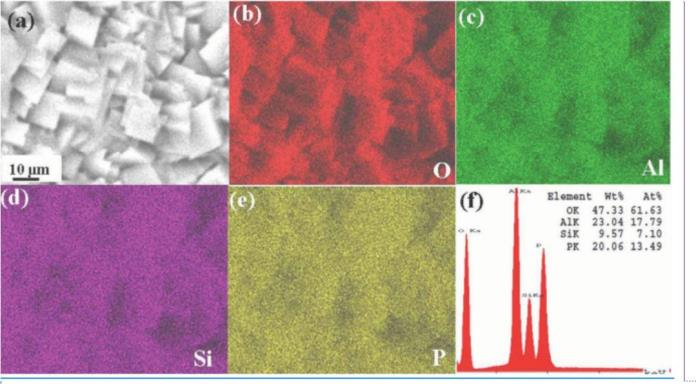
clay-Al2O3 support, (b-e) consequent elemental mapping (O, Al, Si, and P) of
the membrane layer, and, (f) corresponding EDAX spectra of the membrane
layer and the inserted table show the quantitative analysis
Das et al. proposed a technique that described a path towards the preparation of a highly oriented SAPO 34 zeolite membrane on silica modified low-cost clay-Al2O3 support via secondary growth hydrothermal technique(Fig.2).53 The proposed synthesis route for membrane fabrication is more effective and facilitated to
develop defect free membranes. The use of intermediate layer and uniform seed layer plays a key role to manipulate the membrane layer orientation. As a result, the synthesized membrane showed higher permeability and H2 /CO2 selectivity. The experimental work and gas separation results have been described and published in the journal of the Royal Society of Chemistry.
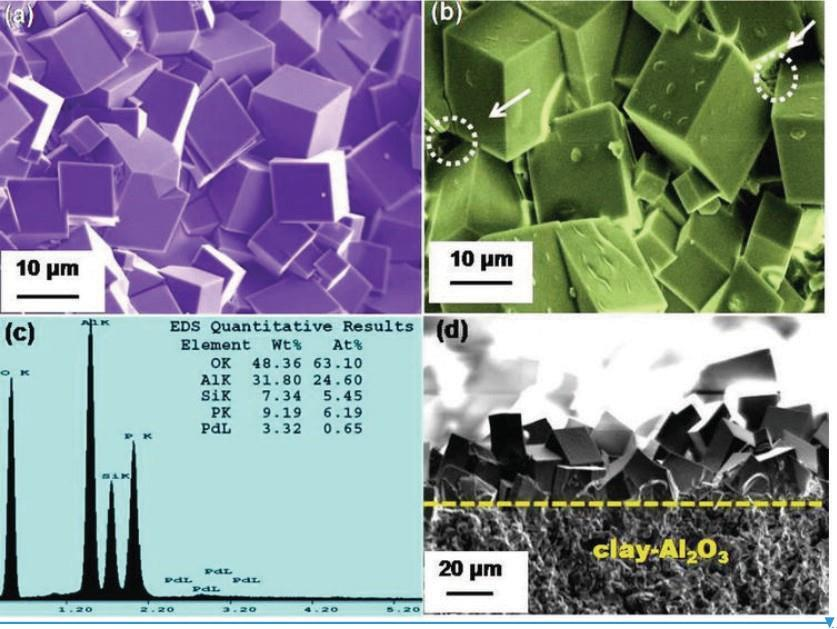
Pd/SAPO 34 membrane (dotted circle indicated by arrow mark shows the
defects formed after calcination processes), (c) corresponding EDS spectra
taken from the selected area indicated by a dotted circle and the inserted
table show the quantitative analysis, and (d) cross-sectional view of the
Pd/SAPO 34 membrane layer.
In another work, a research finding has been described on how to minimize the defects in t h e SAPO 34 membrane via impregnation of metal nanoparticles in the membrane surface. Here, the Pd NPs are deposited in the membrane matrix by a simple dip-coating method. During the thermal treatment of the Pd/SAPO 34 membrane, the defects are formed because of the removal of the structure-directing agent (SDA) from the
zeolite pores. However, the presence of Pd NPs is entrapped inside the non-zeolitic pores and clogged the defects of the membrane. Field emission scanning electron microscopy (FESEM) and elemental mapping of the membrane cross-section confirmed the presence of NPs and shows that most of the Pd NPs are deposited at the interface of the membrane (Fig. 3). The membrane shows higher H2/CO2 separation results and it is anticipated that the proposed technique may be useful for making a defect free membrane. The description of the research finding has been published in the American Chemical Society (ACS) journal.
Based on our previous research expertise and ongoing R&D activities in the area of zeolite membrane, we are anticipated to develop a zeolite based membrane technology to solve the industrial problem. In past, our scientists have acquired experience in the development of prototype zeolite membrane and utilized them for CO2 separation from flue gas. In that work, the real problems were identified during the larger area membrane fabrication steps and it’s a well-known problem in scale up use cases. It was observed that the presence of defects deteriorates the separation efficiency of the membrane. The presence of defects has a huge negative impact on the selectivity results. The synthesized prototype membrane showed better permeability results but the selectivity results are low. The probable solution is to reduce the membrane defects by pre-synthesis and post-synthesis treatment approaches and other controlling factors like the synthesis process and thermal
treatment etc. It is believed that if all the above said parameter is optimized, then the defect minimization process can be successful. As a result, it is probable to reach the higher separation efficiency along with higher permeability in any gas separation process involving ceramic membranes.
The previous experience and knowledge of the synthesis of prototype zeolite membranes could help our R&D team to find a potential and effective solution to minimize the defects in membrane layer to achieve better separation results. It is envisaged that the membrane based separation technology could be a useful asset in Steel/Iron industry for CO2 separation and anticipated to increase in the near future. We expect our approach to innovating industrial-scale zeolite membranes for gas-gas separation, would deliver a high-impact technology for CO2 separation from flue gas and reduce the CO2 footprint in the steel industry. With our in-house technical and business development expertise, we are expecting to innovate the commercially viable product/s and technology
in the field of the gas separation membrane. Moving forward, there remains plenty of room to grow especially with regard to the development of a defect-free thin-layer zeolite membrane for scale-up implementation, pilot tests, market penetration, and commercialization. We are ready to discuss our proposed innovation with different organizations/industrial partners to embrace the technology.